Showing posts with label ctime_s. Show all posts

Friday, 10 October 2025

XVE Game Engine: Thinking about AOE Damage Effects

I'm back on my home game engine and I need an area damage effect, which can apply to all the members of a team/party.... The trouble?  How to synchronize this over a network connection.

First of all, I know for certain that the server running my game world knows the center of the effect, and it knows the radius of the effect.  And it does tick the effect application against each player whether their client can visually see the effect - it appears in their combat log text immediately.

So the mechanics are there, the clients however, all run at different rates, they're in different locations world wide, with different latencies to the servers source of truth.... And so I need to now think about how I am going to tackle the issue of each player seeing an effect.

Simplicity first, the effect is just going to be represented by a wireframe sphereoid, it'll be a smooth shaded sparkles dripping effect later.

This quiets my engine engineer smooth brain some what and I now just need to synchronize the expansion from the center to the maximal radius of the effect, this will turn up at the clients from the server at any time after the effect is registered as affecting the players on the server... This maybe unfair, however, there is reason behind this in the design - the player will know the effect is going to be cast as there is pre-warning from the caster... They need to learn that and move before they see the effect basically.... That is, they need to be smart.... I know I know this is a cheap answer, but I am all about cheap answers to problems today - and in my gameplay loop, seeing the caster "spit" this effect and moving before it expands into a cloud of hell... is pretty rewarding.

So I have a time point, on all clients they know when the effect begins, they know the maximal extent and they know the center of it....

What I am thinking about now is the client side only, so without any network traffic, an entity definition for the effect which the client has pre-loaded into some dictionary of effects to execute, and this contains a rate per millisecond from the start time and the effect system has to linear interpret along the line.

I am thinking about designing some form of easing curve authoring for the client effect system - and I'll likely reuse this in the animation system - whereby I can try different easing curves.
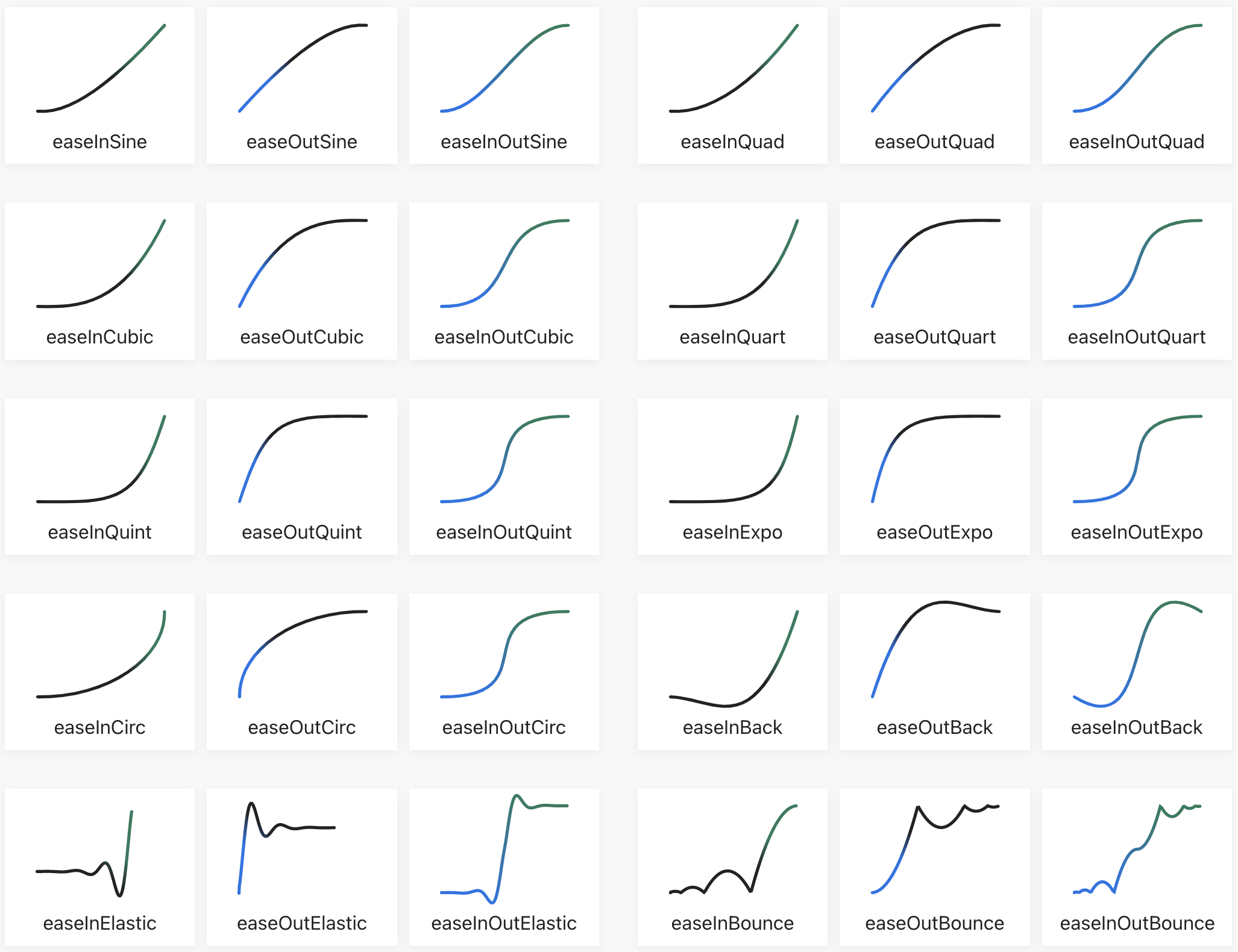

 The system interpreting along the line could be more than a lerp too, again that'll be down the line.

Replaying, reversing or otherwise on such a defined effect is going to be quite interesting as reversing the delta will allow me to contract it again.... Though time-line ordering is to be forwards chronologically only for my game play, that maybe a feature I want to play with in future.

What's the problem then?  Yeah, it sounds like I have a handle on what I want, except.... I've assumed all the way through my thinking that the effect is fixed, known and defined up front.... The problem?

I want to scale the effect with the power of the caster, and this is not known up front, sure I can just add a float and multiply by 0.5 for half power or anywhere along that scope, heck I could even scaled the enemies power by some easing function as well and combing the power function along that line with the rate of the effect.... So there are answers to be had.

My problem is randomness, when it's random, things look wrong, they don't feel right when playing them and the rewarding feeling I had from the fixed function gameplay doesn't turn up... It's in some fort of metaphysical uncanny valley which I can't quite explain doesn't feel right.

I will have to play about some I feel.... 

Wednesday, 29 March 2023

A mini-break in C++ Optimization (Pt 1)

I have had one of those evenings, in reviewing some code for a friend I came across a repeated pattern where he would iterate over collections, strings and other linear items in a loop and mutate them.  We're of course talking C++ here, and he had this whole myriad of loops all over sanitizing, processing, event summing values.

I asked whether he had access to the STL he immediately got a bit uppity, he and I have never seen eye to eye about using the STL.

I advocate it be used, even just standing something up which you go back and make more performant or more memory efficient later, just stand up your project, don't get bogged down in details of the best string, or the best vector.

He however stands by his having "long tested examples I use all the time, just ignore them"...

No.

Simply put his examples, used in a smattering of programs, peer reviewed very infrequently by a miniscule handful of people is not good enough, use the STL, it is seen by literally millions of engineers, it is very portable and well adopted, use it to your advantage.

We sparred a little about this, but then I simply asked whether he had any parallelism in his algorithms?

Nope, of course STL can just use them.... You can provide the execution policy.

Lets take one of his examples, a simple function to give him the time & date as a character array.

char* GetDateTimeStringHis()
{
time_t now = time(0);
char* buffer = new char[64];
memset(buffer, 0, 64);
ctime_s(buffer, 63, &now);
for (int i = 0; i < 64; ++i)
{
if (buffer[i] == '\n') buffer[i] = 0;
}
return buffer;
}

This returns a character array buffer raw pointer.... No, he interjected, it returns a string.  A raw pointer to memory is NOT a string folks, this is where my argument on that point begins and ends.  This code is very unsafe, I don't like it and I certainly insist it can easily leak memory, for whom is going to delete that buffer?

So I erase that buffer with an actual standard string:

        std::string GetDateTimeStringV1()
{
time_t now = time(0);
std::string buffer(64, 0);
ctime_s(buffer.data(), 63, &now);
for (int i = 0; i < 64; ++i)
{
if (buffer[i] == '\n') buffer[i] = 0;
}
return buffer;
}

he didn't like this, but accepted perhaps that was better, he argued about the string constructor taking a length and a character (zero) to initialize itself with, but went with it.  It's safer, simpler, easier to read code.

I'm still not happy, I don't like that loop:

        std::string GetDateTimeStringV1()
{
time_t now = time(0);
std::string buffer(64, 0);
ctime_s(buffer.data(), 63, &now);
std::transform(
buffer.begin(), buffer.end(), buffer.begin(),
[](const char character) -> char
{
if (character == '\n')
{
return 0;
}
else
{
return character;
}});
return buffer;
}

He hated this, and I have to be honest I don't like the lambda either, but this is correct, using the transform algorithm and the lambda could be expressed in a location it could be reused, or just as a free function somewhere, it doesn't have to be inline here making a mess of reading the code.

What however is it doing?  It changes any new line to a zero in the buffer string, why?  Well ctime_s puts a new line at the end, so if we reverse the iteration we may get a much better performance we can early out of the loop.  But we can even just do away with the whole transform, we know it's the last character so just set it to zero as an optimization and simplification.  My friend can get behind this now:

        std::string GetDateTimeStringV2()
{
time_t now = time(0);
std::string buffer(64, 0);
ctime_s(buffer.data(), 63, &now);
buffer[std::strlen(buffer.data())-1] = 0;
return buffer;
}

We can even further think about this code, what will strlen do?  It might count from 0 to N to find the first zero character as the value, could we therefore count backwards from the 64th position in the buffer?  Well, we know the format of the data and time we get is known:

        Wed Mar 29 23:36:01 2023

Twenty five characters with the new line, adding another for the null termination character, so we can always just set the twenty fourth to zero and reduce the buffer size at the same time to perfectly fit!

        std::string GetDateTimeStringV3()
{
time_t now = time(0);
std::string buffer(26, 0);
ctime_s(buffer.data(), 26, &now);
buffer[24] = 0;
return buffer;
}

I feel I'm getting somewhere, I just want to make sure we use the STL version of the time functions now and use brace initialization for the "now".

        std::string GetDateTimeStringV4()
{
std::time_t now{ std::time(0) };
std::string buffer(26, 0);
ctime_s(buffer.data(), 26, &now);
buffer[24] = 0;
return buffer;
}

This ended my concerns and improved the performance of the code, he was calling this function nearly every time he logged, nearly every time he sent a network message and for very many of his database transactions.  This was 10 minutes of just thinking about the problem.

Now... Back to <algorithm> and execution policy with him...